
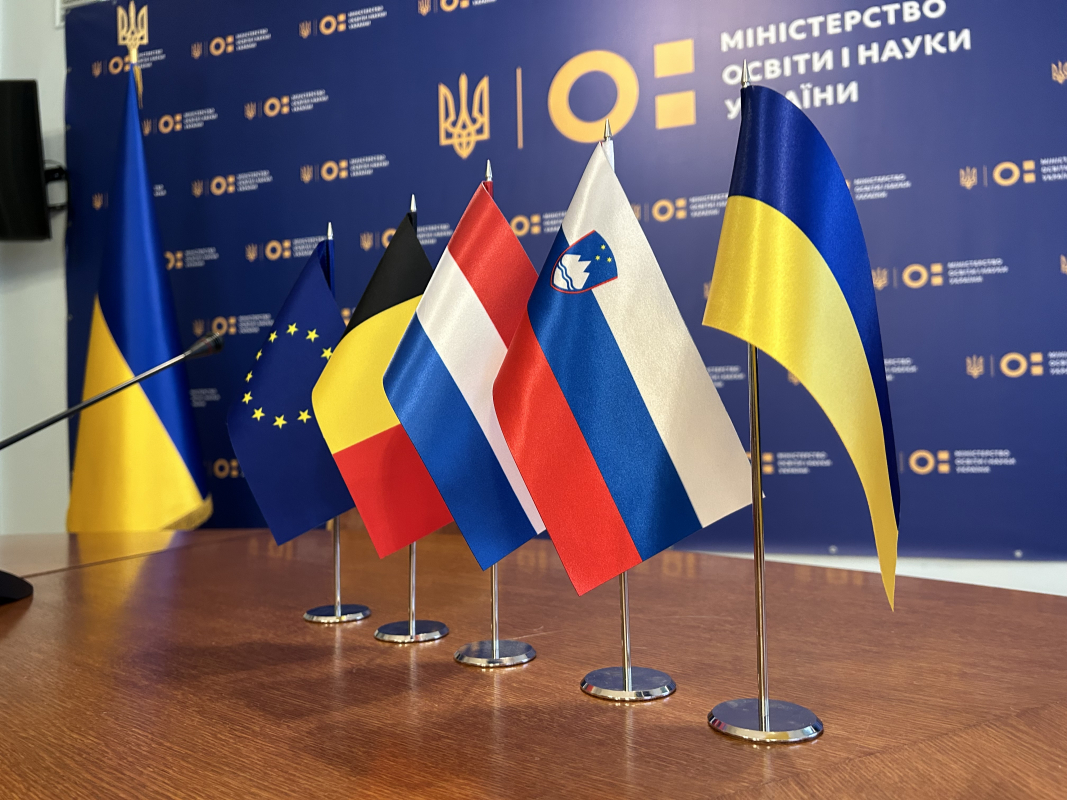
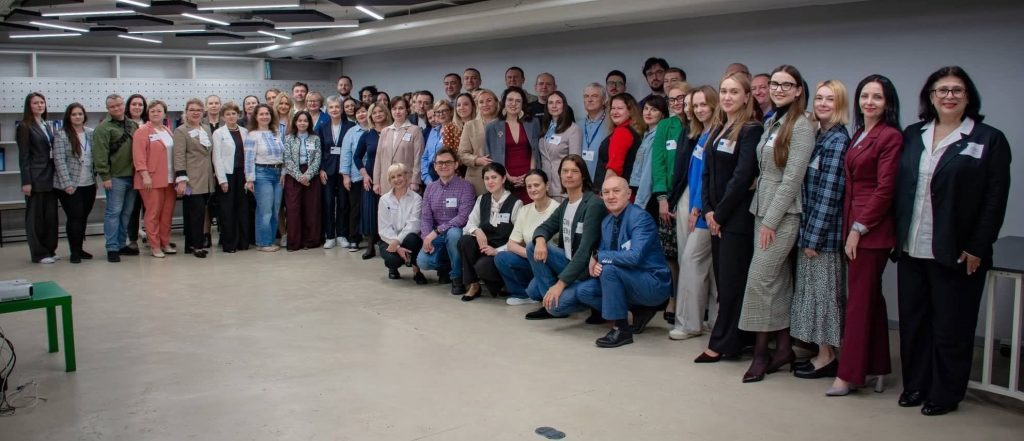
On June 4-5, 2026, the National Forum on Open Science and Research Assessment Improvement was held in a hybrid format at the National Technical University of Ukraine “Igor Sikorsky Kyiv Polytechnic Institute.” The event summarized the outcomes of the three-year international Open4UA project aimed at the systematic implementation of open science principles in Ukraine.
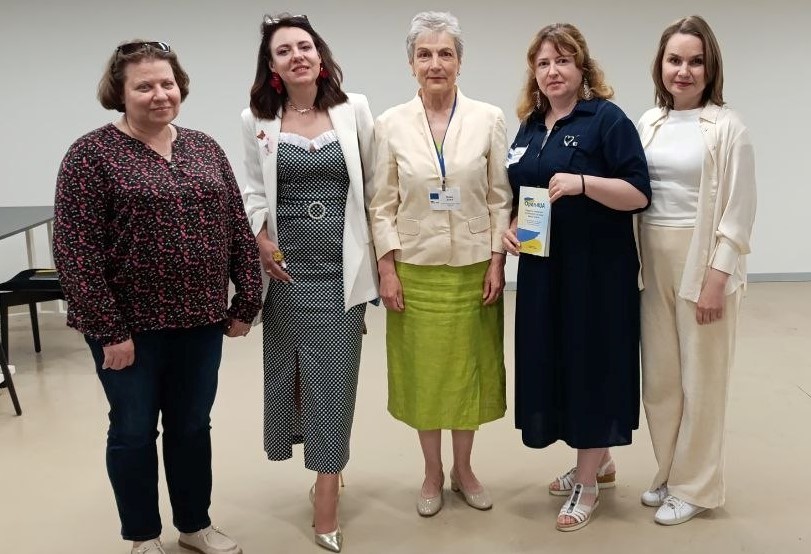
Representatives of the National Academy of Educational Sciences of Ukraine also joined the Forum, including researchers from the Institute for Digitalisation of Education of the NAES of Ukraine, who are actively engaged in advancing open science, the digital transformation of education, and the development of scientific culture within the academic community.
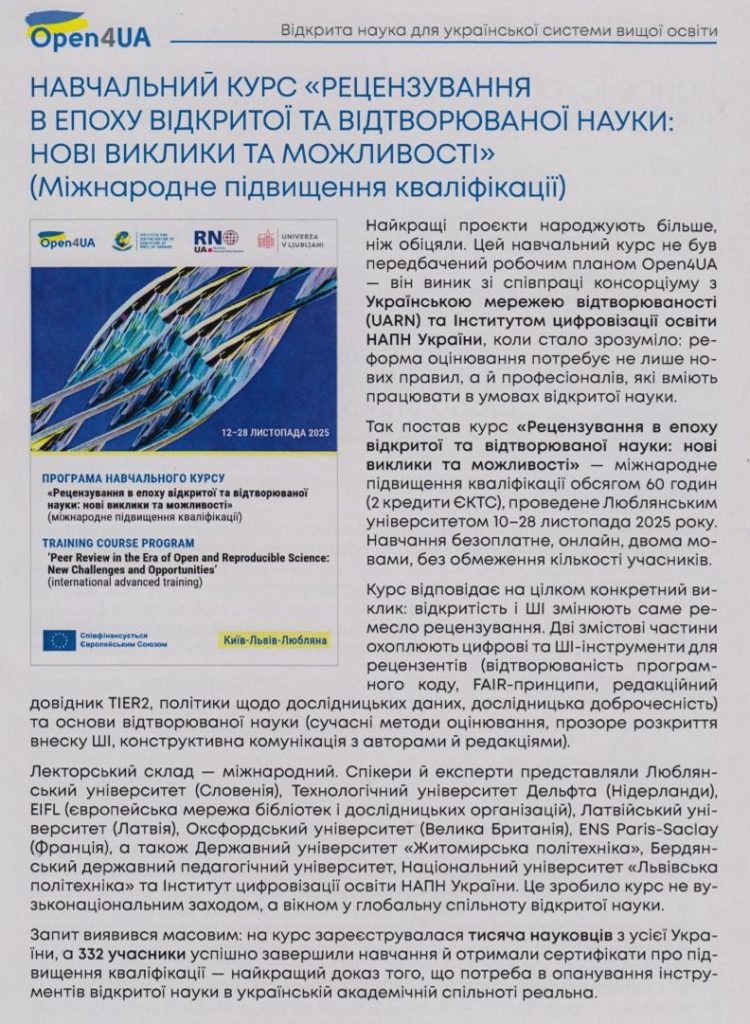
Within the framework of the Forum, positive feedback and outcomes were highlighted regarding the joint training course conducted in cooperation with the Institute for Digitalisation of Education of the NAES of Ukraine, entitled “Peer Review in the Era of Open and Reproducible Science: New Challenges and Opportunities.” The course was aimed at enhancing the digital and open science competencies of researchers, educators, and early-career scientists in the areas of contemporary open science principles, academic integrity, transparent peer review, and reproducibility of research results. More than 330 participants received certificates upon successful completion of the course.
During the Forum, Deputy Minister of Education and Science of Ukraine Denys Kurbatov presented key achievements in reforming the research assessment system and implementing open science practices in Ukraine. In particular, the recommendations of the Open4UA project have already been integrated into the new Methodology for the State Certification of Research Institutions and Higher Education Institutions. Among the important outcomes presented were institutional tools for higher education institutions, including model open science policies, research data management plan templates, and the development of the professional standard “Research Data Management Specialist.” Special attention was also devoted to the activities of the newly established Coordination Council on Open Science under the Ministry of Education and Science of Ukraine.
One of the key strategic achievements of the Open4UA project was the development of a European integration-oriented draft law aimed at implementing open science principles in Ukraine. The document envisages the legislative establishment of open access to publicly funded research results, the introduction of FAIR data requirements, and the development of a national open science infrastructure in accordance with the standards of the European Research Area.
The participation of representatives of the NAES of Ukraine in the Forum confirms the active role of the academic community in shaping a modern open scientific and educational environment and fostering the culture of open and reproducible science in Ukraine.