
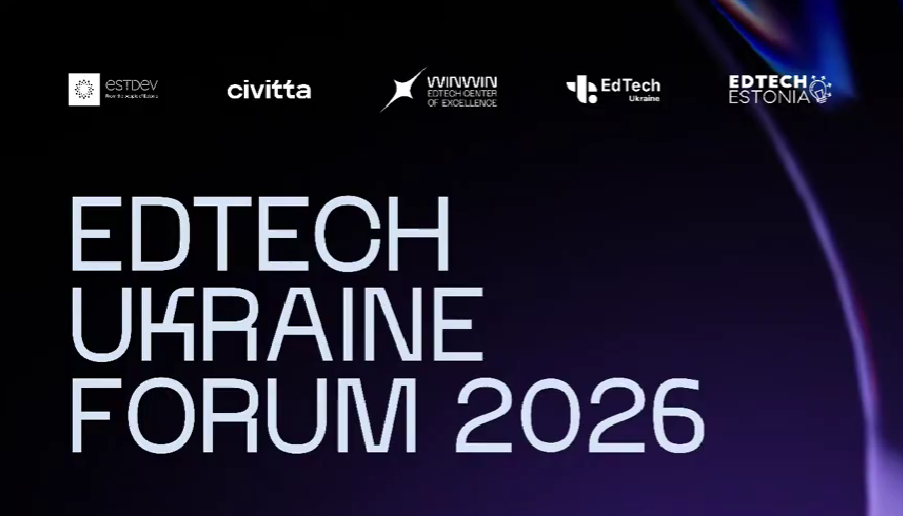
On August 25, 2026, Olga Pinchuk, Deputy Director of the Institute for Digitalisation, of Education participated in the EdTech Ukraine Forum 2026—a key platform for discussing the development of digital education, educational technologies, and Ukraine’s innovation ecosystem. The forum program featured an address by the President of Estonia and discussions involving the Ministry of Education and Science of Ukraine, the UNICEF Representative Office in Ukraine, ESTDEV, the WINWIN EdTech Center of Excellence, the EdTech Ukraine association, the “Mriya” digital education ecosystem, CIVITTA, and leading Ukrainian EdTech organizations. Program >>>
The Institute for Digitalisation of Education of the NAES of Ukraine is a member of the EdTech Ukraine association; therefore, participation in the forum was a key component of professional engagement with the national community of educational technology developers, researchers, public sector representatives, and international partners.
Forum participants focused particularly on establishing a resilient education system amidst the war and for post-war recovery, developing digital educational infrastructure, integrating artificial intelligence into the educational process, supporting the Ukrainian EdTech ecosystem, and implementing evidence-based approaches to the use of digital tools. The presentation of a study on the state of Ukraine’s EdTech ecosystem and the discussion regarding prospects for scaling effective digital solutions generated significant interest. A recording of the event broadcast is available here >>>
During the forum, it was repeatedly emphasized that the digital transformation of education must be based not only on technological innovations but also on the readiness of all participants in the educational process to use them. The teacher remains the central figure in these digital changes; at the same time, it is important to ensure parental involvement and the development of digital competence, critical thinking, and skills for the responsible use of artificial intelligence.
Particular attention was paid to international experience, specifically the digital transformation of education in Estonia. The example of long-term state initiatives—ranging from the “Tiger Leap” program to the modern “AI Leap” initiative—demonstrated the importance of strategic planning, ensuring the interoperability of digital systems, data protection, and equal access to digital resources, as well as the state’s role in creating favorable conditions for the development of educational innovations without over-regulating pedagogical practice.
One of the key conclusions drawn from professional discussions was the need to shift from implementing isolated digital products to creating a holistic, evidence-based ecosystem of educational technologies. Participants emphasized the importance of piloting innovations and evaluating their pedagogical impact before scaling them up, as well as supporting research-based approaches to the digitalisation of education and fostering partnerships among the government, research institutions, educators, and EdTech companies.